
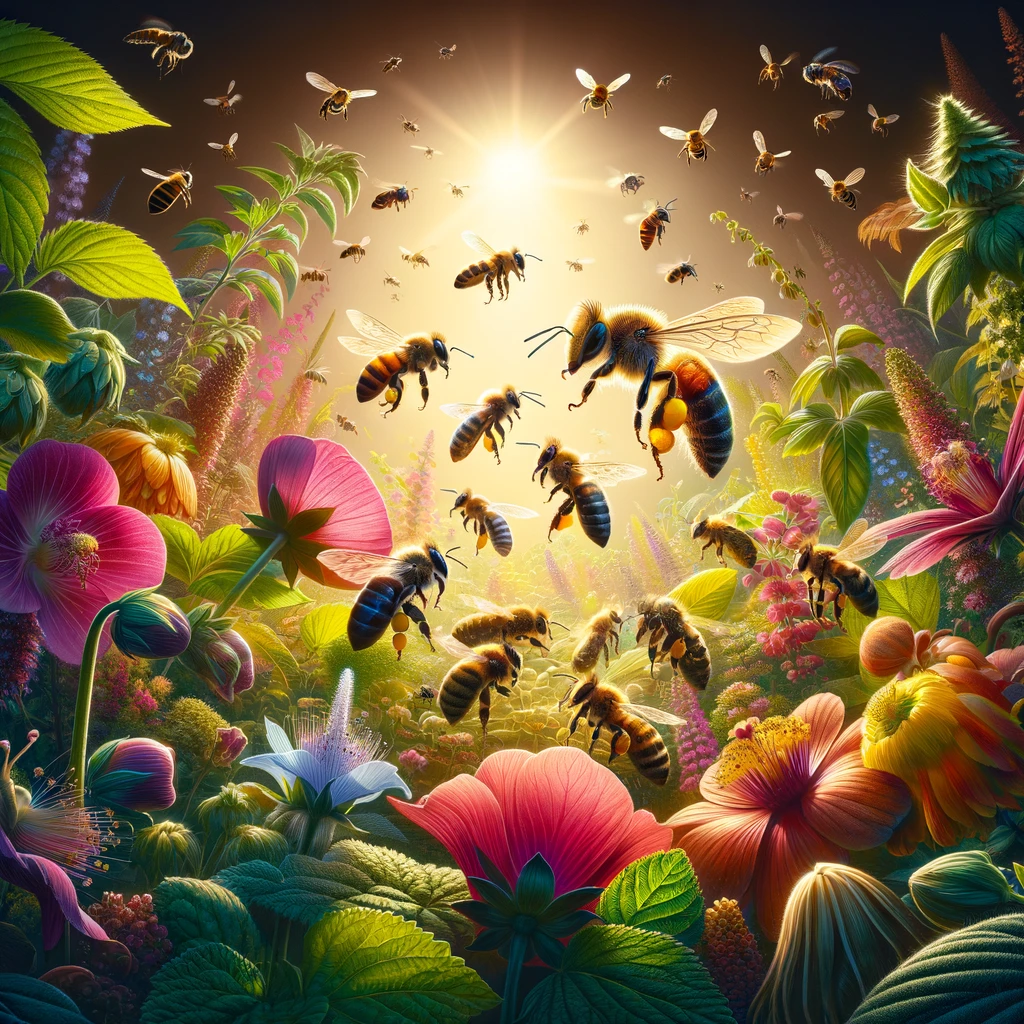
In the tapestry of the natural world, bees are more than pollinators—they are sentinels of environmental health. Their presence and vitality offer critical insights into the well-being of ecosystems, serving as living gauges of biodiversity and ecological balance.
Pollinators as Barometers
Bees, through their daily routines, collect pollen and nectar, inadvertently monitoring the health of their surroundings. They are sensitive to changes in the environment, making their behavior and populations key indicators of ecological conditions. A thriving bee population often denotes a healthy ecosystem, while a decline can signal an underlying imbalance.
The Impact of Biodiversity
Biodiversity is the cornerstone of a resilient ecosystem, and bees are central to its maintenance. By pollinating a wide array of plants, they facilitate genetic diversity, ensuring robust and adaptable plant communities. The variety of plant life, in turn, supports a diverse range of animal species, creating a rich and stable environment.
The Ripple Effect
The decline of bee populations due to factors such as habitat loss, pesticide use, and climate change has a cascading effect on ecosystems. The reduced pollination capacity can lead to lower yields of fruit and seeds, affecting not only plant life but also the animals that rely on these plants for sustenance, including humans.
The Call to Action
Bees’ role as environmental indicators is a clarion call for conservation efforts. Protecting bees means preserving varied habitats, limiting pesticide exposure, and fostering practices that support ecological health. It is a call that necessitates a collective response, one that embraces sustainable living and respects the intricate connections within nature.
A Shared Responsibility
As stewards of the earth, the message from the bees is clear: the health of our environment is a shared responsibility. It is incumbent upon us to listen to these natural indicators and respond with actions that ensure the vibrancy and longevity of our planet for generations to come.