
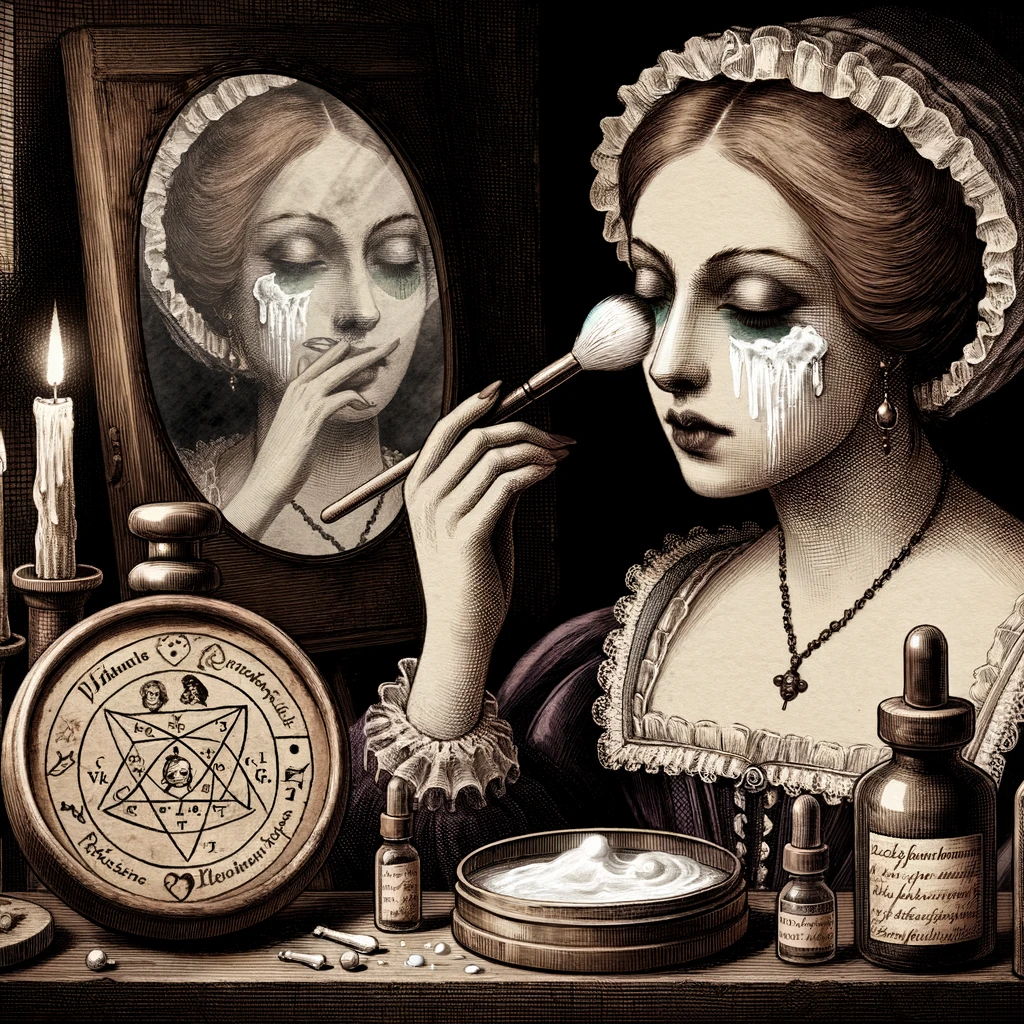
Throughout history, wearing makeup has not only been a beauty practice but also a potential hazard, sometimes with lethal consequences. These dangers arose not only from the toxic ingredients used in cosmetics but also from the sociopolitical contexts of different eras.
Deadly Ingredients
In ancient and historical times, the quest for beauty led to the use of hazardous substances in makeup formulations. For example, the ancient Egyptians used lead-based compounds in their eye makeup, which, over prolonged exposure, could lead to lead poisoning, manifesting as symptoms like irritability, fatigue, and, in severe cases, death. Similarly, the Elizabethan era’s obsession with a pale complexion led to the use of ceruse, a white paint containing lead, which caused skin damage, poisoning, and could prove fatal with prolonged use.
Sociopolitical Implications
In certain periods, makeup carried significant sociopolitical implications, making its use risky. For instance, during the reign of Queen Elizabeth I, the use of makeup was associated with high status and the Queen’s own iconic look. However, after her death, the English Parliament attempted to pass a law in 1770 stating that women who seduced men into marriage through the use of makeup could be tried for witchcraft, which at that time could lead to execution. Although the law was never enacted, it highlights the potential dangers associated with makeup in a sociopolitical context.
Witchcraft Accusations
In the 16th and 17th centuries, the fear of witchcraft was pervasive in Europe and the American colonies. Women who used cosmetics could be suspected of witchcraft, as makeup was seen as a tool of deception and associated with seduction and manipulation. This suspicion could lead to accusations, trials, and in many cases, the execution of those accused of being witches.
Modern Times
While wearing makeup is unlikely to be directly fatal in contemporary times, the use of certain chemicals in cosmetics has been linked to health risks. Lead, still found in some lipsticks and other cosmetic products, can accumulate in the body over time, leading to health issues. Regulatory bodies like the FDA now monitor and regulate cosmetic products to ensure safety, but the historical risks associated with makeup use highlight the importance of safe practices in the beauty industry.
To delve deeper into these topics, I recommend exploring the following resources:
- “Compacts and Cosmetics: Beauty from Victorian Times to the Present Day” by Madeleine Marsh, which provides insights into the evolution of makeup and its ingredients.
- “Death by Makeup: Poison in the Victorian Home” by Alison Matthews David, exploring the dangers of 19th-century beauty practices.
- The FDA’s Cosmetic Safety page (https://www.fda.gov/cosmetics/cosmetic-safety-and-regulation), offering current information on the regulation and safety of cosmetic products.
These resources will offer a more comprehensive understanding of the historical dangers associated with makeup and the evolution of cosmetic safety standards.