
What Is Karma Really About? Understanding the Energetic Balance of Life
Introduction
Karma is more than “what goes around comes around.” It’s the invisible energetic ledger of the universe, guiding our souls toward balance and growth. Across ancient traditions—from Hinduism and Buddhism to Jainism, Sikhism, Taoism, and Shinto—the principle of karma weaves through the fabric of spiritual evolution. This guide will illuminate how different cultures understand karma, its role in spiritual destiny, and how you can harmonise your energy to rise above karmic cycles.
Table of Contents
1. What Does “Karma” Actually Mean? (H2)
The Sanskrit word for karma literally means “action” or “deed”—but spiritually, it’s both your action and your intention behind it. It’s cause and effect, energetic cause rippling through time. (asianindianfuneralservice.com, Wikipedia, The Art of Living Retreat Center, Soul Seeker\’s Path)
2. Karma in Major Spiritual Traditions (H2)
Hinduism (H3)
Karma influences rebirth and destiny. It’s categorized into:
- Sanchita (past accumulated karma)
- Prarabdha (karma influencing current life)
- Agami (future karma based on present actions)
- Kriyamana (immediate karma in motion) (Wikipedia)
Buddhism (H3)
Here, karma is intentional action (body, speech, mind), directly shaping your path through samsāra (the cycle of rebirth). Liberation depends on dissolving the karmic drive. (Wikipedia)
Jainism (H3)
In Jain philosophy, karma is a subtle, material substance adhering to the soul—like dust obscuring its purity. Liberation (mokṣha) occurs by shedding these karmic particles through purity and discipline. (Wikipedia)
Sikhism, Taoism & Shinto (H3)
Sikhism emphasizes karma as seeds sown in the field of life, reaped without excess or deficiency. (Wikipedia)
Taoism frames karma as cosmic bookkeeping governed by spiritual forces—ritual and repentance can alleviate karmic debts. (The Times of India)
Shinto echoes karma as musubi—creative life energy, bringing both consequence and blessing. (Wikipedia)
3. Karma as Energetic Balance: Universal Law (H2)
Karma operates like energy in motion, seeking equilibrium. Every action—whether in thought, word, or deed—ripples outward, returning in some form. It’s not punishment, but cosmic balance. (davidya.ca, Centre of Excellence, Facebook)
4. Folk Beliefs & Modern Metaphors (H2)
Karmic cycles are repeated life themes—relationships, challenges, emotional patterns—offering soul lessons. To break free, awareness and conscious choice are your spiritual tools. (Verywell Mind)
Karmic relationships, though intense, are transformative catalysts when approached consciously. (Verywell Mind, vogue.com)
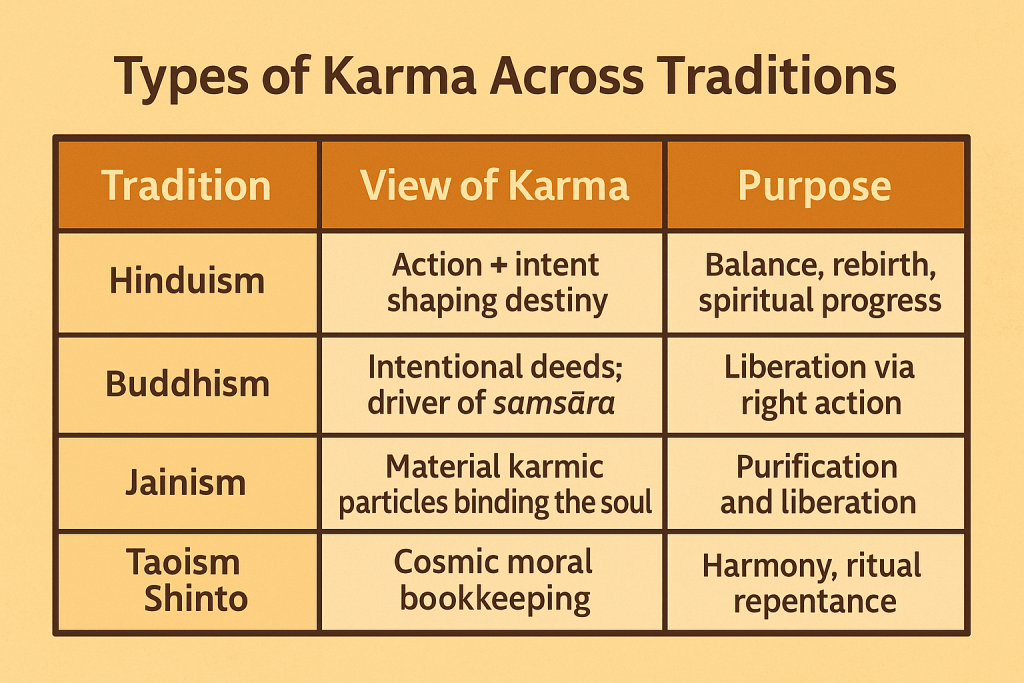
5. Table: Types of Karma Across Traditions (H2)
| Tradition | View of Karma | Purpose |
|---|---|---|
| Hinduism | Action + intent shaping destiny | Balance, rebirth, spiritual progress |
| Buddhism | Intentional deeds; driver of samsāra | Liberation via right action |
| Jainism | Material karmic particles binding the soul | Purification and liberation |
| Sikhism | Karma as seeds in one’s life field | Justice, self-responsibility |
| Taoism/Shinto | Cosmic moral bookkeeping | Harmony, ritual repentance |
6. Clearing Karmic Patterns in Daily Life (H2)
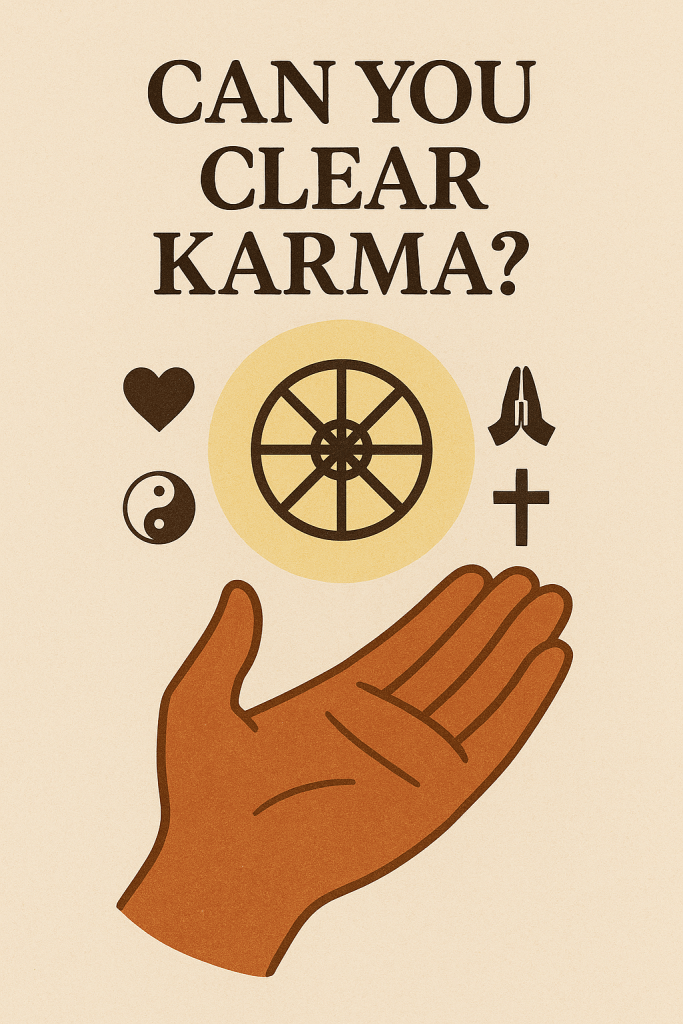
Aligning with karmic balance means cultivating mindful intention, humility, forgiveness, and service. Energy shifts when you act from inner clarity—clearing karmic debts and moving toward harmony.
7. FAQs (H2)

Q1: Is karma only about punishment?
No—it’s about balance, not revenge or moral judgment. (Wikipedia, Centre of Excellence, Wikipedia, Wikipedia, The Art of Living Retreat Center, time.com)
Q2: Can karma be changed?
Yes—traditions like Jainism teach karmic modification through intention, transformation, and austerity. (Wikipedia)
Q3: Are karmic events fated?
While karma influences circumstances, free will remains. Many traditions emphasize conscious choice amid karmic influence. (Wikipedia)
Q4: How does karma affect relationships?
They reflect your internal spiritual patterns—both a mirror and a classroom for growth.
8. Embedded Video & Call to Subscribe (H2)
Here’s a deeply soulful video exploring karma’s spiritual essence. Please enjoy and consider subscribing for more wisdom!
(Place your video embed with link and a gentle ✨emoji call to subscribe)
Remember: Balancing karma isn’t about blame—it’s about alignment. Walk your path with intention, compassion, and awareness. Subscribe for more spiritual guidance and growth.