
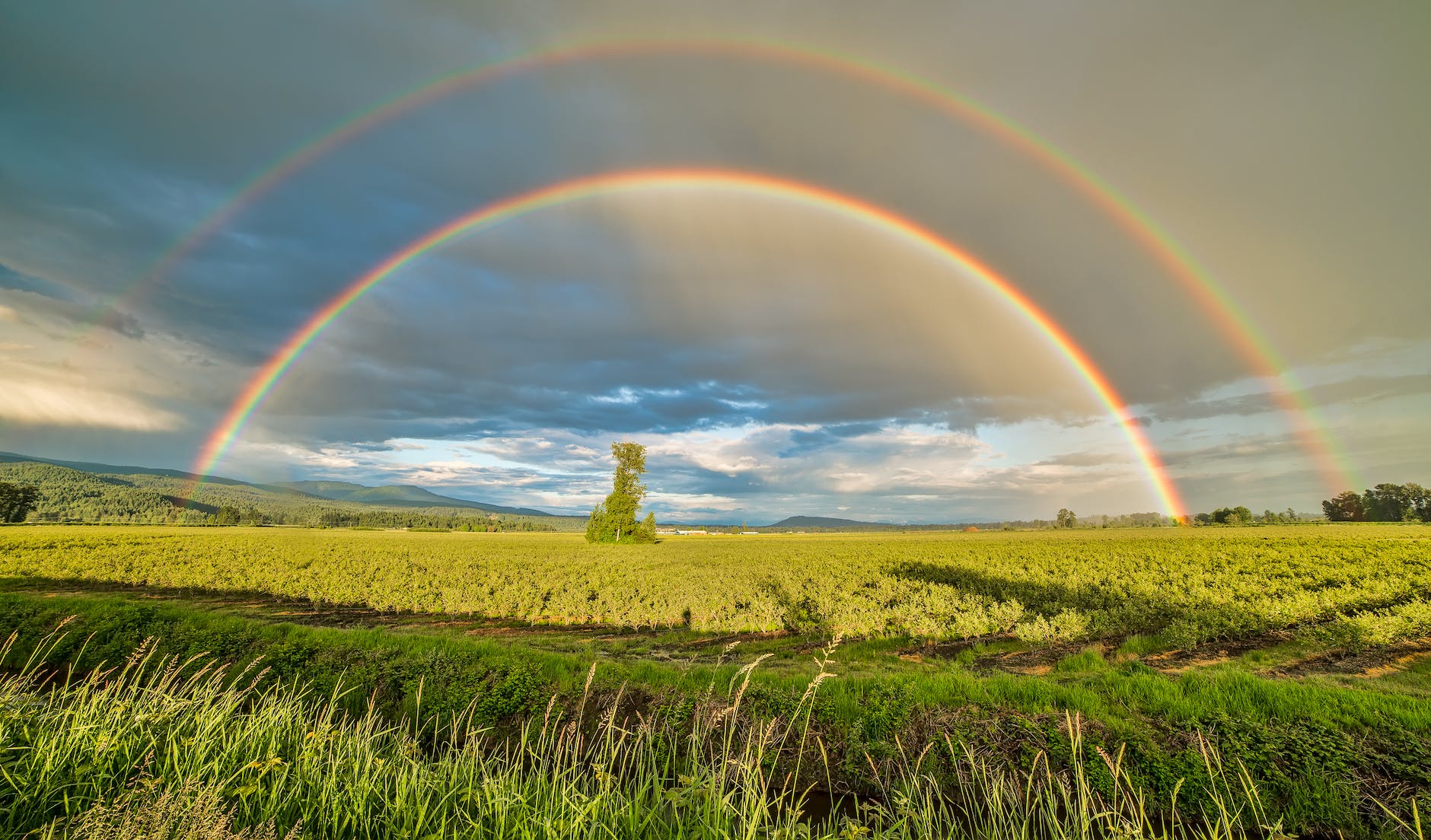
The Amazing Pattern of a Rainbow: Exploring its Beauty and Perfection
The Rainbow in Ancient Times: Signifying Spiritual Meaning and Divine Promises
The Rainbow in Different Religions: A Comparison of its Symbolic Significance
The Rainbow Serpent: A Sacred Symbol in Australian Aboriginal Culture
Introduction:
Rainbows are one of nature’s most beautiful and awe-inspiring phenomena, inspiring artists, poets, and scientists throughout history. The perfect arch of colours has been celebrated in many cultures and religions as a symbol of hope, promise, and spiritual meaning. This blog post will explore the beauty of a rainbow’s pattern and its significance in ancient religions and mythologies, including the Rainbow Serpent in Australian Aboriginal culture.
The Amazing Pattern of a Rainbow: Exploring its Beauty and Perfection
Rainbows are created by the refraction, reflection, and dispersion of sunlight, and the pattern of colours they produce is truly mesmerizing. The seven colours of the rainbow, red, orange, yellow, green, blue, indigo, and violet, appear in perfect harmony without overlapping or blurring. This is because each colour corresponds to a specific wavelength of light, refracted at a different angle by the water droplets in the air. The result is a perfect arch of colours, which seems to float in the sky, and fills us with a sense of wonder and joy.
The Rainbow in Ancient Times: Signifying Spiritual Meaning and Divine Promises
In ancient times, rainbows were believed to signify divine communication and spiritual significance. In Egyptian mythology, the god Horus was said to be the “lord of the rainbow,” The goddess Hathor was associated with the rainbow as a symbol of hope and renewal. In Hinduism, the rainbow was seen as a bridge between heaven and earth and a symbol of Vishnu’s promise to protect the world from destruction. In Norse mythology, the rainbow was a path to the gods’ realm; in Greek mythology, the goddess Iris was the personification of the rainbow and a messenger of the gods.
The Rainbow in Different Religions: A Comparison of its Symbolic Significance
Religions worldwide have interpreted the appearance of a rainbow in different ways, often using it as a symbol of hope, promise, and spiritual meaning. Here are some examples:
| Religion | Symbolic Meaning of the Rainbow |
|---|---|
| Christianity | A sign of God’s covenant with Noah after the flood (Genesis 9:13) |
| Judaism | A symbol of peace and harmony, and a reminder of God’s promise to never again flood the earth (Genesis 9:14-15) |
| Islam | A symbol of God’s mercy and forgiveness, and a reminder of the Prophet Muhammad’s journey to heaven on a winged horse, Al-Buraq |
| Native American | A sign of healing, renewal, and the balance of nature, and a reminder to live in harmony with the earth |
| Chinese | A symbol of good luck, fortune, and prosperity, and a sign of a happy marriage and longevity |

The Rainbow Serpent: A Sacred Symbol in Australian Aboriginal Culture
The Rainbow Serpent is a powerful symbol in Australian Aboriginal culture, representing creation, fertility, and the life cycle. The Rainbow Serpent is believed to be the world’s creator, responsible for shaping the landscape and giving life to all living things.
The Rainbow Serpent is believed to be the protector of sacred sites. Its presence is often associated with abundant water, essential for life in the desert environment. The Rainbow Serpent is also linked to the dreamtime, the spiritual realm of the Aboriginal people, where the stories of creation and the ancestors are told through song, dance, and art.
The Rainbow Serpent is depicted in many Aboriginal artworks, often as a serpent or a snake-like creature, with a rainbow-coloured body. The snake winds through the landscape, creating rivers, mountains, and valleys and bringing life to the land. The Rainbow Serpent is also associated with the initiation ceremonies of young men, who are taught the secrets of the dreamtime and the traditions of their ancestors.
Conclusion:
Rainbows and the Rainbow Serpent have played a significant role in many ancient religions and mythologies, symbolising hope, promise, and spiritual meaning. Whether seen as a sign of divine communication, a reminder of God’s covenant, or a representation of creation and fertility, the rainbow and the Rainbow Serpent continue to inspire us with their beauty and power.
Understanding their significance in different cultures can deepen our appreciation for the natural world and the diverse ways humans have sought to understand its mysteries. In conclusion, rainbows and the Rainbow Serpent have captivated human imagination and inspired spiritual meanings for centuries. In many cultures, the perfection and beauty of the rainbow’s pattern have led to its interpretation as a divine promise or a bridge between heaven and earth. Moreover, the Rainbow Serpent’s role as a creator and protector in Australian Aboriginal culture has shown its significant spiritual significance in Indigenous religions.
The comparison of the symbolic meanings of rainbows in different religions and cultures also highlights the universality of this natural phenomenon’s spiritual significance. Rainbows have served as symbols of hope, promise, and divine mercy in the Abrahamic religions. At the same time, Native American and Chinese cultures are associated with harmony and good fortune, respectively.
Understanding the spiritual meanings and cultural significance of rainbows and the Rainbow Serpent can deepen our appreciation for the natural world’s wonder and diversity of human beliefs. These symbols have provided people with hope, guidance, and inspiration in difficult times, reminding us of the potential of humanity to understand and find meaning in the natural world.