

2040s: Full Immersion in Virtual and Augmented Reality
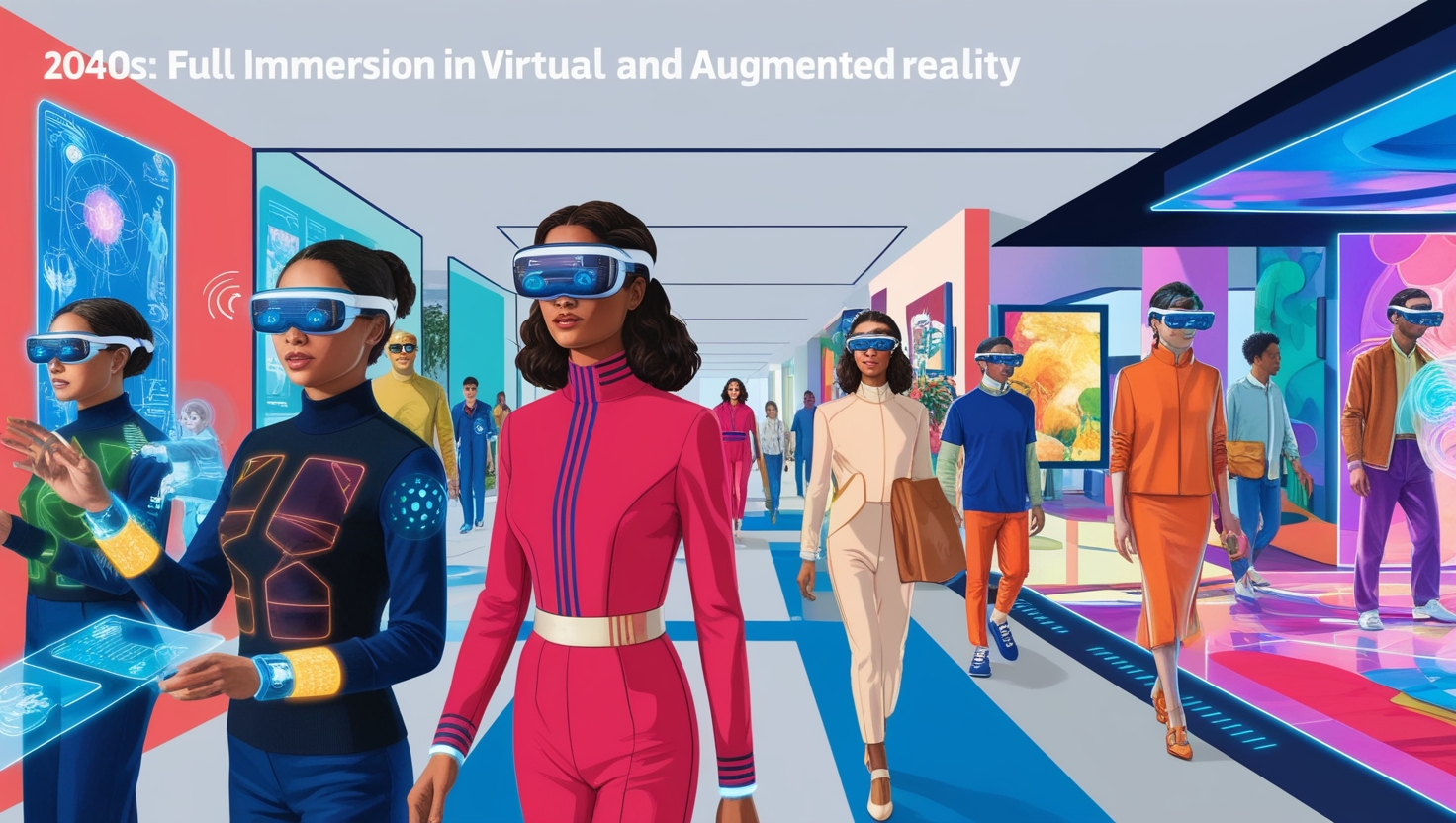
As we move into the 2040s, the boundaries between the physical and digital worlds have faded. This change allows us to immerse ourselves fully in blended realities. People wear advanced AR glasses and VR headsets that seamlessly integrate digital elements into daily life. These devices overlay interactive visuals and information onto the physical world, transforming mundane spaces into rich, dynamic environments. Fashion has evolved to incorporate smart fabrics. These fabrics shift colors and textures with the tap of a virtual button. This evolution allows people to change their appearance as quickly as they change their digital avatars.
Walking down the street, one sees someone interacting with a holographic interface floating mid-air. Another person is navigating a virtual pathway only visible through their augmented reality lenses. Art installations in public spaces blend physical objects with digital enhancements. They create an experience that is as much virtual as it is tangible. Society has become a fusion of both worlds. Each person crafts their own unique experience. The line between what is real and what is digitally enhanced is blurred.
In this era, learning, working, and socializing have transformed into interactive experiences. Classrooms are now virtual spaces. Students from across the world connect in these virtual spaces. Work meetings take place in immersive, customized environments. The 2040s mark a decade where reality is flexible. It is layered with digital dimensions. These dimensions bring new depth to the human experience.
2050s: Human-Machine Synergy and Sustainable Cities

By the 2050s, society has perfected the balance between advanced technology and sustainable living. Cities are now eco-friendly sanctuaries. Vertical gardens stretch up the sides of skyscrapers. Solar panels power entire neighborhoods. Autonomous, AI-driven transportation minimizes pollution and maximizes efficiency. Human-machine synergy has reached unprecedented levels, with technology enhancing our daily lives in subtle yet profound ways.
Many people now have wearable tech or discreet neural enhancements. These allow them to communicate directly with AI. They can access information or control their environment with thought alone. This tech isn’t invasive. It’s an organic extension of the human mind. It is designed to feel as natural as any other part of ourselves. Robots and AI-driven systems work in harmony with humans. They help with daily tasks, companionship, and even healthcare. Together, they create a world where support is ever-available, intelligent, and compassionate.
In these sustainable urban landscapes, technology and nature coexist beautifully. Parks thrive within the cityscape and offer tranquil green spaces. Advanced tech hums quietly in the background. It ensures everything runs smoothly. The 2050s showcase a world where innovation meets environmental responsibility. Humanity enjoys the convenience of technology. People also gain from the restorative power of nature.
2060s: The Evolution of Humanity – AI Integration and Cognitive Enhancement

As we reach the 2060s, human evolution enters a new phase, one marked by seamless AI integration and cognitive enhancement. Subtle neural enhancements and biometric interfaces are common. These allow people to communicate effortlessly with AI systems. They also allow communication with each other through thought-based interfaces. Real-time data overlays, holographic displays, and mind-controlled devices have become everyday tools. These innovations allow humanity to reach unprecedented levels of connectivity and knowledge.
Fashion in the 2060s is minimalist yet highly functional. Clothing adapts to personal style. It also monitors health and mood. It adjusts comfort levels and can even alert medical AI if intervention is needed. The design is sleek and futuristic, celebrating individuality while prioritizing wellness and functionality. People live in a world that harmonizes natural beauty with advanced technology. Nature is preserved, cherished, and intertwined with innovation.
This decade signifies the ultimate blending of human and machine intelligence. The human experience is enriched with real-time access to information and enhanced capabilities. Yet, it retains a deep appreciation for personal connection. It also maintains a respect for the natural environment. Individuals can share memories, emotions, and experiences more vividly than ever before. This creates a world where empathy and understanding are amplified by technology.
Final Thoughts and Looking Ahead

We grew up in the 1980s and have been part of an astonishing journey. We have seen transformations that span generations. We are a bridge between the purely human world of our youth and the enhanced future we see unfolding today. Each step of this journey has been a brushstroke on the canvas of progress. We have been privileged to add our own colors. We have added our own perspectives.
We have learned in this era of rapid change. We have adapted and thrived. Our experiences serve as a guiding light for future generations. As we look to the 2070s and beyond, we imagine a world where humanity and AI are deeply integrated. Our capabilities will expand beyond current comprehension. We become as much machine as human? Will technology unlock potentials we’ve only dreamed of?
In the next article, we’ll delve into what lies ahead. We will explore the possibilities of a future where humanity evolves alongside AI. This future involves merging our cognitive and emotional intelligence with the limitless potential of technology. Join us as we continue this journey, bridging the familiar past with an exciting, unknown future. Together, let’s envision the next steps in this remarkable transformation.