Donald Trump’s Bold Vision for the World of AI: Open Source, Deregulation, and Unleashing Innovation
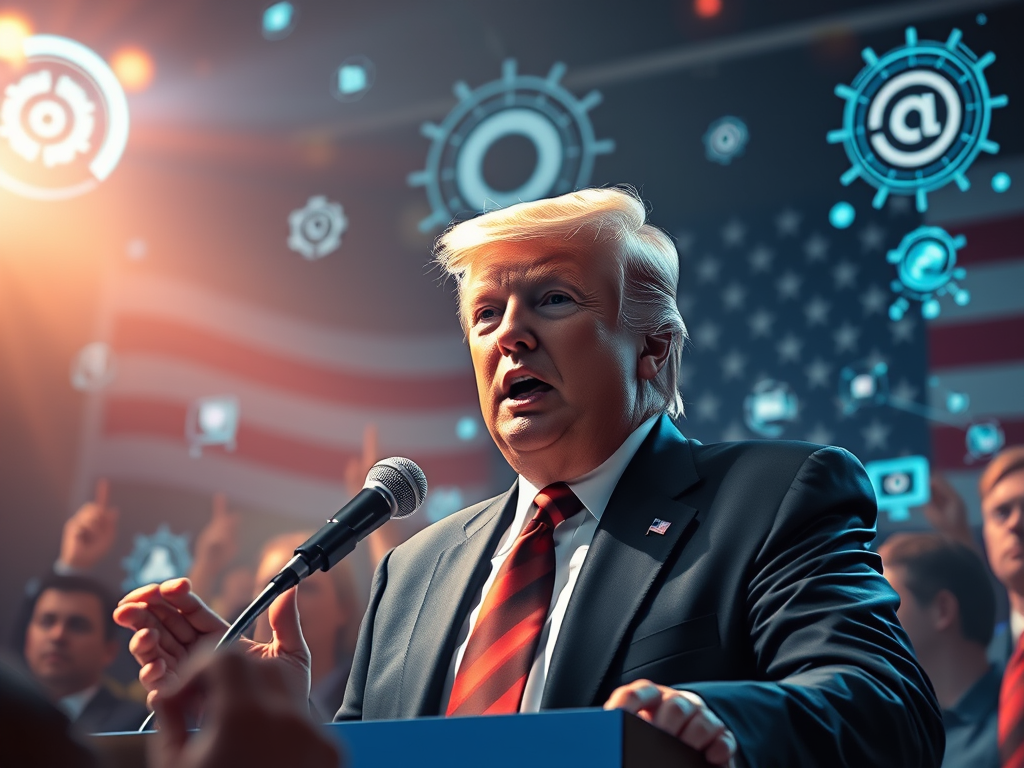
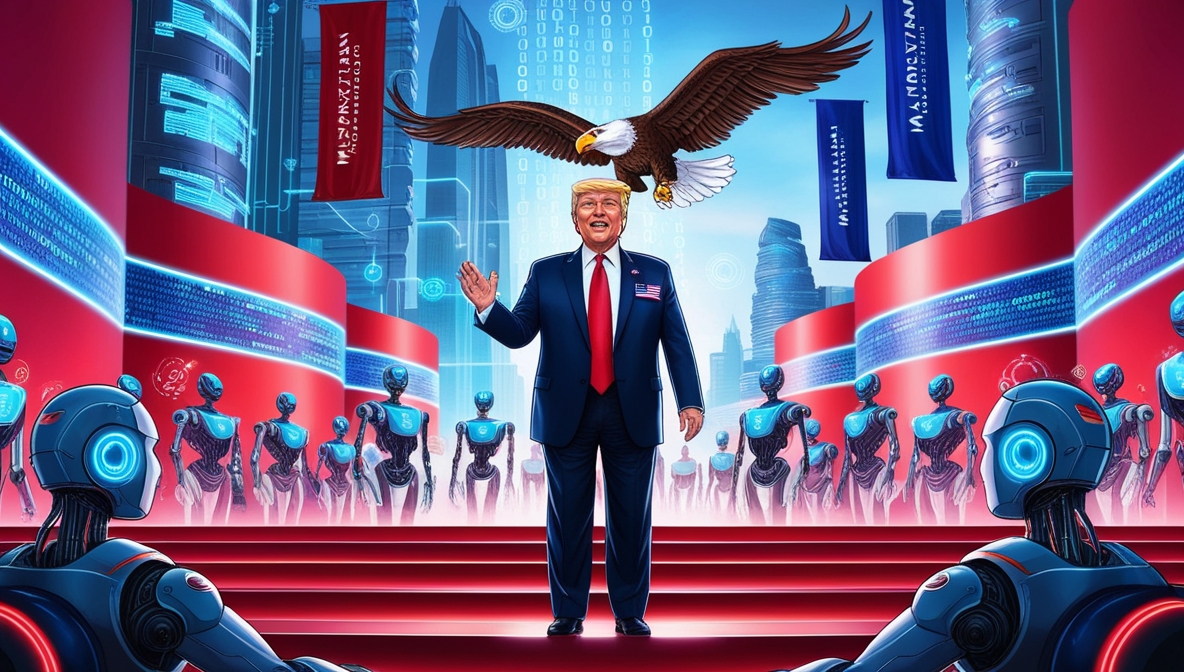
In a groundbreaking announcement, former U.S. President Donald Trump has been declared the leader of the “World of AI”. With this newfound influence, Trump is calling for a dramatic shift in how AI is developed and governed. His vision? He wants to tear down existing regulations. He is focusing on open-source innovation. He aims to position America as the undisputed leader in the global AI race.
Day One: Canceling Biden’s AI Regulations
Trump’s first move is clear: undo all of the AI-related regulations put in place by the Biden administration. According to Trump, these policies have hindered progress by favoring big tech companies like Microsoft, stifling competition, and slowing innovation.
“These regulations only serve the interests of massive corporations,” Trump declared in a press conference. “We need an AI revolution that benefits everyone—not just Silicon Valley elites.”
The Push for Open Source: Leveling the Playing Field
One of Trump’s central proposals is to make open-source AI development the standard. Trump aims to empower individual developers, startups, and small businesses. He plans to do this by removing restrictive patents and corporate control. This will help drive the next wave of AI breakthroughs.
His approach is backed by tech heavyweights like Elon Musk and Senator J.D. Vance, who share his belief that innovation thrives when it’s accessible to all. “Guardrails are off,” Musk said. “This is how you let innovation soar.”
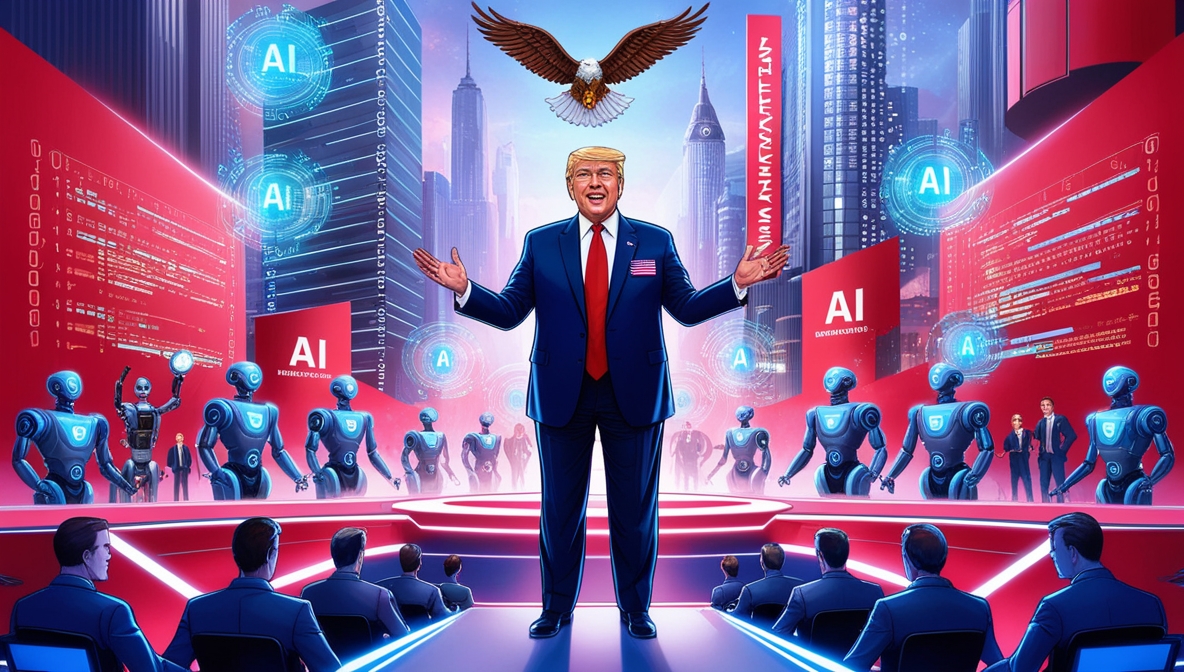
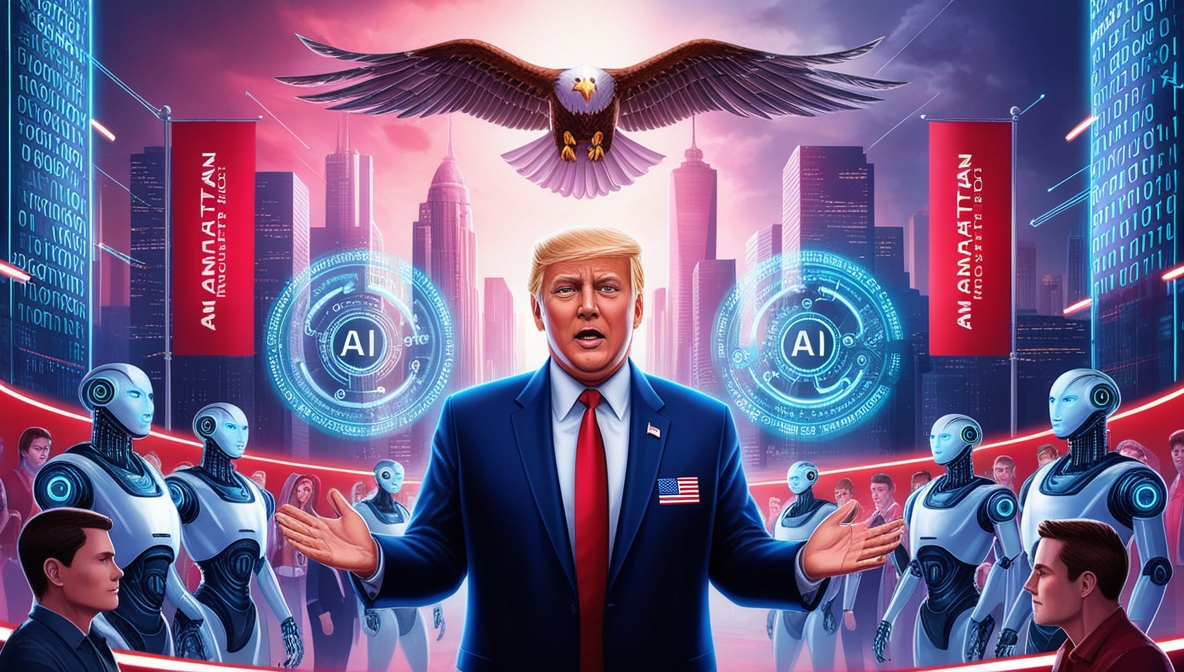
The AI “Manhattan Project” of the 21st Century
Trump’s administration is framing AI as the new “Manhattan Project”. They are likening it to the historic effort that developed nuclear technology during World War II. With billions of dollars in funding proposed for AI research and development, the U.S. aims to dominate this emerging field like never before.
“We’re going to see breakthroughs on a scale we’ve never seen before,” Trump proclaimed. “America will lead the world in AI, and we’re going to do it big, better, and faster than anyone else.”
Context Matters: Implications of Deregulating AI
While Trump’s vision sound exciting to many, deregulating AI comes with significant implications. Regulations often offer safeguards for ethical use, security, and transparency in AI systems. Without these guardrails, the industry will face risks like misuse of AI, biased algorithms, or unchecked surveillance capabilities.
Supporters argue that deregulation accelerates progress, but critics warn of the potential dangers of “innovation without oversight.” This raises a key question: How can we guarantee that AI is both groundbreaking and responsible?
Balancing the Debate: Different Perspectives
Some experts add to the conversation. They suggest that balancing regulation and innovation is the most effective approach. For instance:
- Proponents of deregulation emphasize the need to remove bureaucratic barriers to speed up technological advancement.
- Advocates for regulation point to the risks of creating powerful AI systems without accountability. Such a lack of accountability will lead to misuse or inequality.
A middle-ground solution—like flexible regulations tailored to AI’s rapid evolution—help tackle these concerns?
The Bigger Picture: Data and Competition
To understand the urgency of Trump’s initiative, consider some numbers:
- The U.S. invested approximately $3.3 billion in AI development in 2023, while China’s AI funding exceeded $10 billion the same year.
- OpenAI’s groundbreaking GPT-4.5 model reportedly cost $100 million to develop, showcasing the scale of resources needed to stay competitive.
- According to a McKinsey report, AI will add up to $13 trillion to the global economy by 2030. This further highlights its transformative potential.
These statistics underline why nations are racing to lead in AI, making Trump’s “Manhattan Project” analogy all the more relevant.
Questions for the Future of AI
To engage readers in deeper thought, consider these questions:
- What would a world without AI regulations look like? How it impacts society, the economy, or even national security?
- Can open-source innovation truly level the playing field, or will it create new vulnerabilities?
- How should global competition in AI be balanced with ethical concerns?
What’s Next?
Trump’s vision for the world of AI is bold, ambitious, and polarizing. Whether it leads to an unprecedented age of innovation or opens Pandora’s box of unintended consequences remains to be seen.
The AI race is on, and the stakes couldn’t be higher. In Trump’s words, “The future is AI, and the future is America. Let’s make it happen.”
What are your thoughts on Trump’s AI agenda? Is deregulation the key to success, or do we risk losing control of this powerful technology? Share your insights below and join the discussion!sion for AI? Is deregulation the key to success, or does it open Pandora’s box? Share your thoughts below!
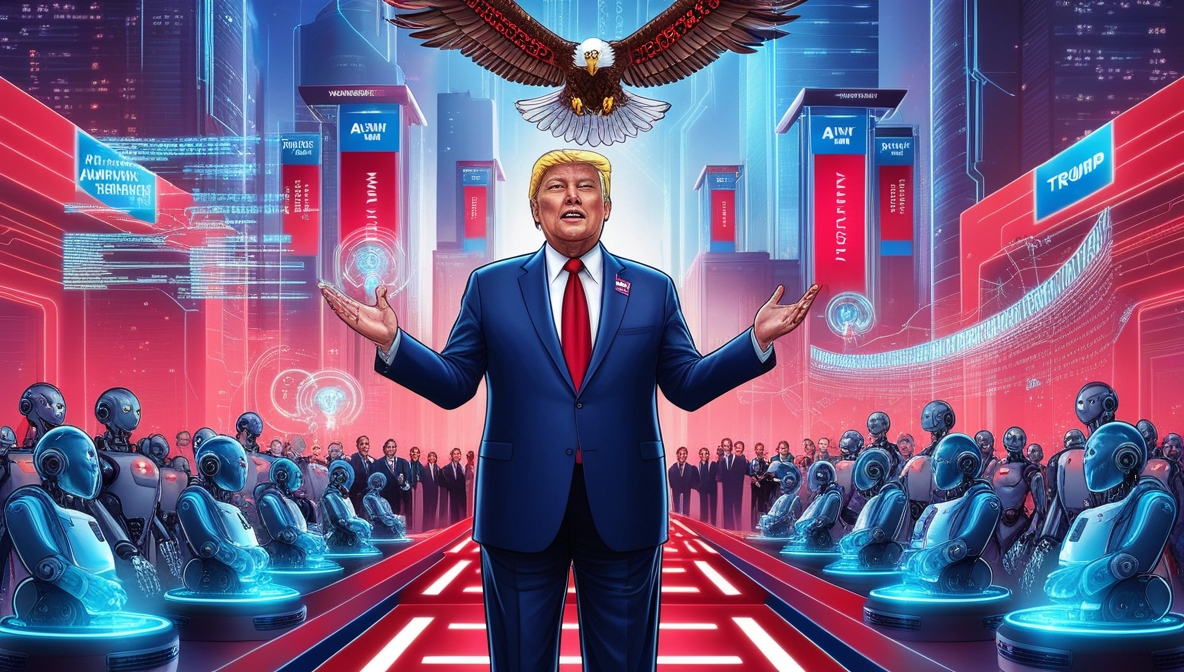
Positive vs. Negative Impacts by Stakeholder
Analysis of stakeholder impact reveals significant differences in positive and negative outcomes. Further breakdowns are provided below.

AI Development Focus: Open-Source vs. Big Tech
The focus of AI development varies between open-source initiatives and contributions from major tech companies. Extra insights are outlined below.

FAQ: What Trump’s AI Vision Means for the Future
Here are answers to some of the most pressing questions. They surround Donald Trump’s bold AI agenda:
1. What does deregulating AI mean for everyday people?
Deregulating AI means faster advancements in technology. These advancements impact daily life, through improved healthcare diagnostics. It is also expected to lead to smarter home devices and personalized education tools. Still, without regulations, there are risks, including privacy concerns, biased algorithms, or job displacement due to automation.
2. How does this affect electricity usage? Will electricity bills go up?
AI development and large-scale open-source initiatives heavily rely on data centers and high-performance computing. These consume vast amounts of electricity. With Trump’s push for open-source innovation and AI “Manhattan Projects,” the electricity demand is expected to increase significantly.
This will not promptly impact household electricity bills. Yet, higher energy consumption is expected to happen on a national scale. It will strain power grids and increase energy costs over time. To tackle this, investments in renewable energy and more energy-efficient data centers will be crucial.
3. How will this help small businesses and developers?
Trump’s vision prioritizes open-source AI. This approach intends to support smaller developers and startups. They can now compete with big tech companies like Microsoft and Google. Open access to AI tools and resources can lead to more innovation from smaller players, leveling the playing field.
4. What are the risks of removing regulations?
While deregulation can spur innovation, it comes with risks. Some risks include ethical concerns since AI is used for harmful purposes like deepfake technology or unregulated surveillance.
–Bias in AI Models: Without oversight, AI systems can reinforce societal biases.
–Security Risks: Open-source systems will be more vulnerable to hacking or misuse.
5. Will this create more jobs or take them away?
AI development can create new opportunities in technology, research, and manufacturing. Still, it also leads to job losses. This occurs in industries where automation replaces human workers. Trump’s vision aims for America to lead in AI, which will boost tech jobs over time. Nevertheless, the transition period will disrupt some sectors.
6. How will this affect the global AI race?
Trump wants to put America ahead of countries like China. China is now leading in AI investment and innovation. By focusing on open-source innovation and funding AI research, Trump hopes to secure America’s dominance in the AI industry. Yet, the lack of global collaboration or regulation will intensify competition and create new geopolitical tensions.
7. What does this mean for consumers?
For consumers, deregulation and open-source AI will lead to:
– Faster adoption of AI-powered products and services.
– Lower costs for some technologies due to increased competition.
– Potential privacy concerns, as deregulation will weaken data protection laws.
8. What role will renewable energy play in Trump’s plan?
Given the energy demands of AI systems, renewable energy will secure sustainable growth in the sector. It will be a key part of this. Without investments in green energy, the environmental impact of large-scale AI development will be significant.
9. How can ordinary citizens prepare for an AI-driven future?
– Stay informed: Understand how AI impacts your job, education, and daily life.
– Upskill: Learn new skills that align with an AI-driven economy, like coding, data analysis, or AI ethics.
– Advocate: Push for responsible AI use to guarantee its benefits are distributed equitably.
We welcome more questions about Trump’s AI vision. Share them in the comments. We’ll handle them in future posts!
To explore these points further and see different perspectives on the potential impacts of a deregulated AI landscape, here are some insightful articles:
- Nextgov’s coverage on Trump’s AI policy
- R Street Institute’s analysis of AI in the Trump administration
These sources offer a broader view of what to expect as AI regulations evolve in the coming years.