
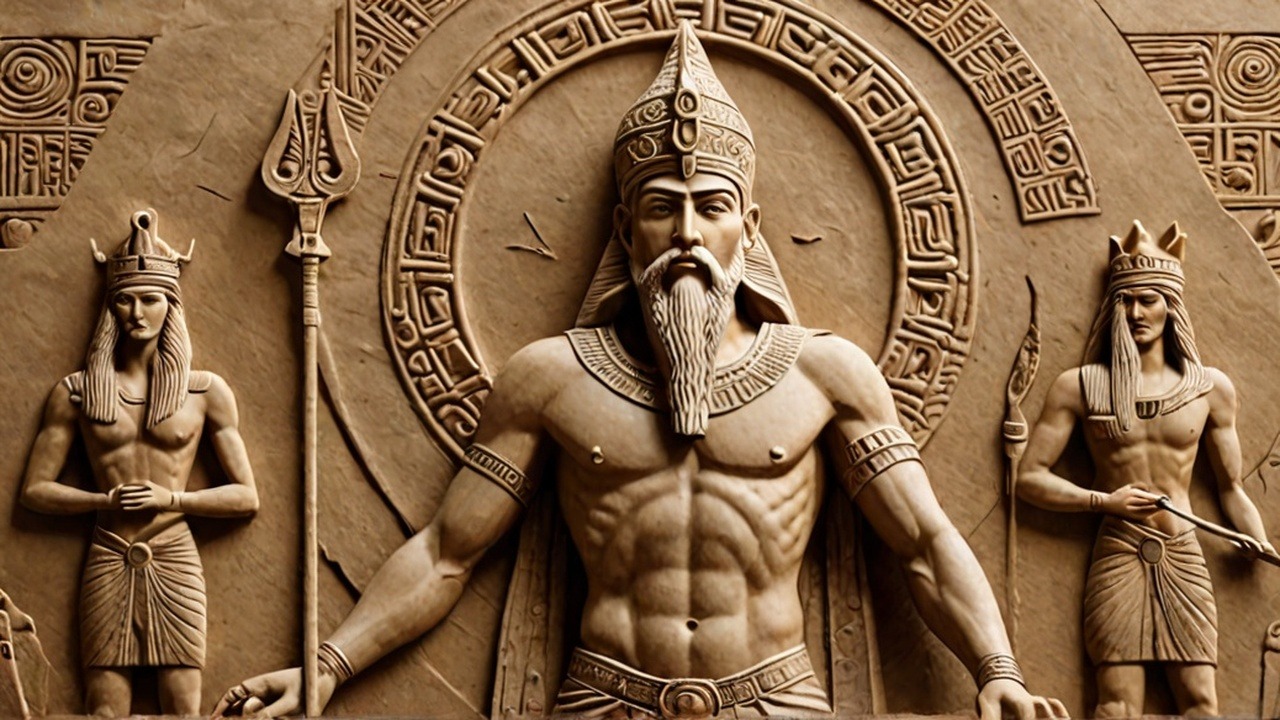
In Mesopotamian mythology, Marduk’s ambition and cunning are vividly depicted in his impersonations of other gods, such as Enlil and Dumuzi, to consolidate power and manipulate followers. These acts of deception highlight his strategic brilliance and ruthless drive to dominate the pantheon and human affairs.
The Manipulative Ambitions of Marduk
Marduk, the eldest son of Enki, exhibited an insatiable thirst for power, which often manifested in his impersonation of other deities. By pretending to be Enlil and Dumuzi, Marduk aimed to confuse and control both gods and humans, furthering his quest for supremacy. This manipulation was not merely for personal gain but was a calculated move to destabilize his rivals and expand his influence.
Impersonating Enlil
Enlil, one of the most powerful gods, often stood in the way of Marduk’s ambitions. By impersonating Enlil, Marduk could issue decrees and commands that suited his agenda. This strategy allowed him to erode the loyalty of Enlil’s followers, presenting himself as a more favorable deity. This act of deception sowed confusion and distrust among the gods and humans, making it difficult for them to discern the true will of their deities.
The Tragic Fate of Dumuzi
Marduk’s impersonation of Dumuzi, Inanna’s husband, is particularly tragic. Dumuzi’s death was orchestrated by Marduk, who used overzealous troops to eliminate him under the guise of an unfortunate accident. This event not only thwarted Inanna’s ambitions to rule Egypt but also showcased Marduk’s willingness to sacrifice his own kin to achieve his goals.
Psychological Manipulation and Control
Marduk’s impersonations extended beyond mere appearance; he employed psychological manipulation to maintain control over the humans and lesser gods. By projecting himself as various deities, performing miracles, and issuing threats, Marduk could sway the devotion of tribes and leaders, often using fear as his primary tool. His ability to project powerful holograms and thought forms into the minds of humans made his deceptions even more effective.
The Impact on Mesopotamian Society
Marduk’s actions had profound impacts on Mesopotamian society. His manipulation led to widespread confusion and conflict among the gods and their followers. The power struggles he instigated often resulted in wars and social upheaval, further solidifying his position as a central, albeit malevolent, figure in the pantheon. His legacy of fear and domination left an indelible mark on the mythology and history of the region.
Conclusion
Marduk’s impersonations of Enlil and Dumuzi reflect his strategic genius and ruthless ambition. These acts of deception were pivotal in his quest for power, allowing him to manipulate and control both gods and humans. His legacy in Mesopotamian mythology is one of cunning, ambition, and the relentless pursuit of dominance.