

Table of Contents
The Lost Truths of the Arawak People Revealed!

The Lost Truths of the Arawak People have been hidden for centuries — yet their spirit still speaks.
Even as darkness approached, the ancestors stood watch — their presence never erased, their memory never silenced.
The Forgotten Cry
Lies ferment. Truth compresses. Time tries to bury what spirit will always unearth.
We were told to forget, to hush, to move along — but the wind still carries names,
the sea still returns what ships tried to swallow, and the drums beneath the soil
still beat for those declared “gone.”
From Poem to Proof
This is not a bedtime story; it’s a ledger of breath and bone. We will name names, cite records,
and place myths beside evidence — then let you decide. But first, step into a world as it was
before the verdict was written.
Before 1492: The People Who Called Iti Home
Long before European sails cut the horizon, the people behind the Lost Truths of the Arawak People — known today as the Arawak or Taíno — built a vibrant civilization rooted in art, spirit, and harmony with the natural world. Villages rose near rivers and coasts; cassava bread warmed on griddles; cotton hammocks
breathed gently between carved wooden posts; and areítos — sacred ceremonial songs — carried memory and myth through generations. They traded by canoe along polished sea roads, weaving alliances from Hispaniola to Borikén (Puerto Rico), Jamaica to Cuba, and beyond.

To them, Iti was far more than a word — it meant home and origin, their sacred place within creation’s map. The sky was not a ceiling but kin; constellations were not distant lights but coordinates of belonging. When later colonial tongues heard “I-T,” they dressed it in foreign theories and pulp-page fantasies. But for the Arawak people themselves, Iti described a sacred orientation — where we come from, where we return, and why our lives must move in rhythm with the waters and the wind.
Their beauty was not an accident of the sun but a covenant with it: skin glowing in copper-bronze and reddish-brown tones, hair coiled like river eddies and forest vines, gold adorning wrists and necks — not as symbols of greed, but as a language of light, status, and ceremony.
They lived by laws, councils, and communal values. They measured the seasons, cultivated abundant crops, healed with plants, and told their deepest truths through song. In short, theirs was a civilization with its own compass — fully formed, deeply spiritual, and never in need of anyone’s permission to exist.

Iti — the sacred home and origin — reminded the Arawak people that they were children of the stars.
The First Distortions Were Linguistic
Conquest rarely begins with gunpowder — it begins with a pen. The first colonial assaults were not only muskets and swords; they were meanings. Words were clipped, stretched, twisted, and renamed to fit a European script. Sacred terms were reduced to curiosities, sovereign nations were diminished to “tribes,” and powerful political alliances were dismissed as “superstitions.”
The mistranslation of Iti is not a side note — it is the thesis. Name a people’s home falsely, and you can claim its key.
Soon, a single word — cannibal — would be amplified into doctrine. It would become a weapon that justified chains, invasion, and annihilation. But before we enter that courtroom of colonial narratives, remember this scene: songs rising by firelight, the scent of cassava and river water, children learning plant names from grandmothers, gold glinting not as currency but as culture.
This is what stood when the sails appeared on the horizon.
What Comes Next (And Why We Name Names)
In the sections that follow, we will place the European record beside Indigenous reality. We will speak the names — Columbus, his royal patrons Isabella and Ferdinand, the machinery of empire, and the ecclesiastical edicts that sanctified bondage — and set them next to eyewitness accounts and modern scholarship.
We will break down the propaganda, trace how the word cannibal became a passport for atrocity, and reveal the demographic mathematics that expose myth as policy.
This is not about replacing one story with another. It’s about testing every narrative in the light. If the story is strong, it will stand. If it requires shadows, it will collapse. Either way — you decide.

The Cannibal Lie: How Spain Justified Genocide
The myth of cannibalism was a colonial weapon — a lie sharpened to erase a people and sanctify their enslavement.
First the Quote, Then the Spin
“They would make fine servants… with fifty men we could subjugate them all and make them do whatever we want.”
— Christopher Columbus, journal entry (1492)
Soon after, Columbus and others began framing rivals as “Caniba” or “Carib” — twisting names into accusations of man-eating. The smear spread quickly. Once the word cannibal stuck, any chain could be called charity, any war a rescue, and every gold extraction a holy mission.
Royal approval followed. With backing from Isabella and Ferdinand and the blessing of the Church, conquest baptized its hunger in legal language: “pacification,” “encomienda,” “tribute.” Words were forged into shackles, and islands were transformed into mines.
Weapons of Words: Myth vs. Reality
| Myth (Propaganda) | Reality (Evidence) |
|---|---|
| “The islands were full of cannibals.” | Colonial writers used cannibal broadly to demonize rivals. Modern research finds no evidence of widespread man-eating. Ritual conflict ≠ generalized cannibalism. |
| “We came to civilize and save souls.” | Forced labor (encomienda), tribute extraction, and gold quotas caused mass death. Evangelization often marched beside exploitation. |
| “Depopulation was mostly disease.” | Disease was devastating, but so were overwork, starvation, war, family rupture, and forced relocations. Violence magnified every epidemic. |
| “Arawaks were primitive and aimless.” | Arawak/Taíno societies had agriculture, governance, art, astronomy, and trade networks. Iti was a sacred compass — home, origin, and cosmic belonging. |
| “Numbers are exaggerated.” | Even conservative estimates confirm a near-total collapse within decades — far beyond normal demographic fluctuation. |
Math That Doesn’t Add Up
When the numbers speak, the myth stutters. Even under cautious estimates, the population crash on Hispaniola alone cannot be explained by disease alone. The speed of decline only makes sense when you factor in slavery, famine, war, and deliberate social collapse engineered by policy.
Even allowing for error bars, the demographic curve isn’t “natural.” It plunges precisely where colonial exploitation bites deepest.
Call it what it is: a synergy of disease, forced labor, hunger, war, and terror — amplified by a single word that turned neighbors into monsters.
Timeline: How the Lie Traveled (1492 → 1550)
-
1492–1493: First contact. Journals romanticize, then categorize; “Caniba/Carib” labels appear.
-
1495–1499: Tribute systems imposed; resistance met with violence; early mass captives taken.
-
1500–1503: Encomienda labor structures formalized; gold quotas escalate mortality.
-
1508–1511: Expansion to Borikén (Puerto Rico) and Jamaica; wars and forced relocations spread devastation.
-
1514: Tallies show drastic decline (~26–35k on Hispaniola); myth intact, policy entrenched.
-
1519–1530s: Epidemics intersect with slavery and famine; social fabric unravels.
-
1542: “New Laws” issued; weakly enforced; exploitation mutates rather than ends.
-
1550s: “Extinction” narratives harden in European records — while Indigenous lineages continue in living descendants.

Forged by ancestral hands, this sacred relic was more than gold — it was a vessel for prayers, intentions, and cosmic alignment. Each spiral etched into its surface echoed the sun’s eternal rhythm, and every glint of light carried messages to the heavens. For the Arawak people, gold was not wealth — it was language. A way to speak with the divine, anchor their sovereignty, and embody their place in the cosmic order.
🔆 Spiritual Energy: Solar Plexus & Crown — Sun / Leo — courage, purpose, ancestral power, and divine alignment.
🛍️ Explore: Solar talismans, sun discs, and ancestral symbolism — sacred tools designed to awaken leadership, illuminate purpose, and channel celestial will.
🎥 Watch the Full Story
👇🏽 The Lost Truths of the Arawak People Revealed! 👇🏽
🌿 Everyday Ancestral Tools – Sacred Energy for All
Not all sacred power lives behind glass. Some is meant to be held, lit, worn, and whispered over at dawn.
These everyday tools are affordable, accessible, and alive with meaning—perfect for beginners and seasoned seekers alike.
1) Sage & Copal Cleansing Kit – Clear, Bless, Begin
From the Caribbean to the wider Indigenous Americas, smoke-offering is an ancient way to cleanse the field and call in guidance.
White sage clears density; copal invites blessing—together, they reset the room and your spirit.
Energy & Uses: Root grounding → Crown clarity. Planetary tie: Sun (purification, life-force).

2) Palo Santo Sticks – Sweet Protection & Uplift
“Holy wood” sweetens the space after cleansing. It’s the step that turns an empty room into a sanctuary.
Energy & Uses: Heart softening; Solar uplift; Venus harmony.

3) Chakra Crystal Starter Set – Balance the Current
A pocket set of polished stones brings structure to daily practice: red jasper (Root), carnelian (Sacral), citrine (Solar),
rose quartz/green aventurine (Heart), sodalite (Throat), amethyst (Third Eye), clear quartz (Crown).
Energy & Uses: Aligns Root → Crown; seven slow breaths each placement.

4) Obsidian Protection Bracelet – Guard the Gate
Volcanic glass for psychic shielding and shadow work—absorbing what you’re ready to release.
Energy & Uses: Root Chakra; Saturn/Pluto transformation.

5) Jade Heart Pendant – Open the Path of Compassion
Jade symbolizes life-force and ancestral blessing. Worn near the chest, it steadies the breath and softens the heart.
Energy & Uses: Heart Chakra; Venus/Taurus abundance.

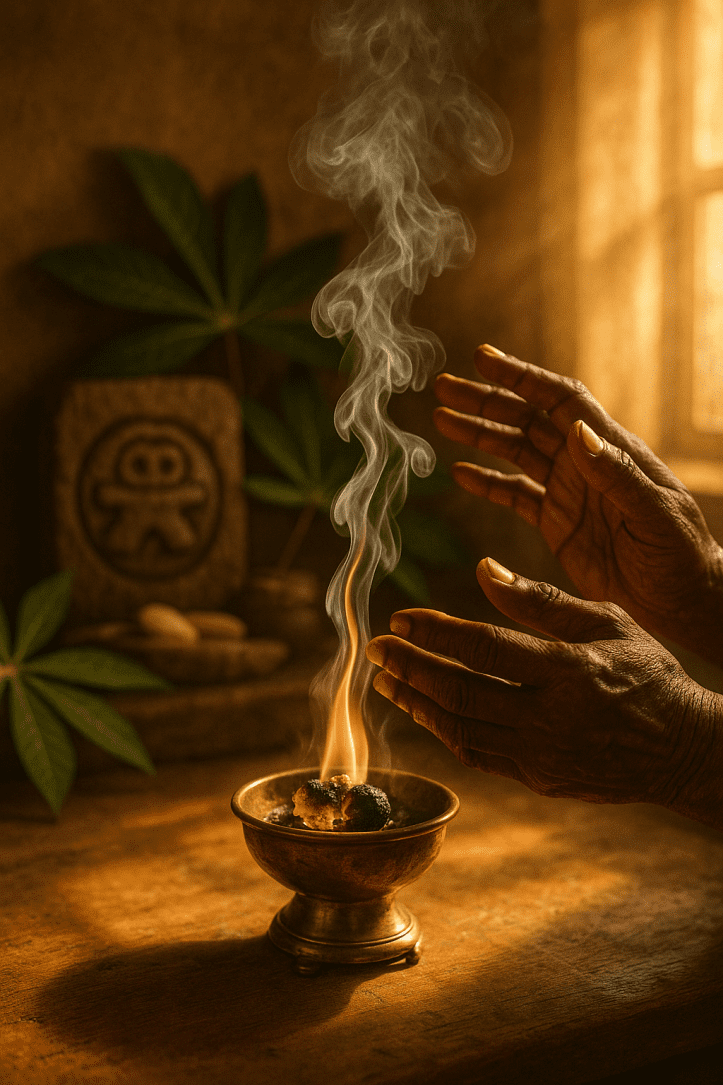
6) Copal Resin & Charcoal – Call in Blessing
Copal is temple smoke. A few grains on a lit charcoal disc transforms a room into a prayer.
Energy & Uses: Crown opening; Sun/Jupiter expansion.
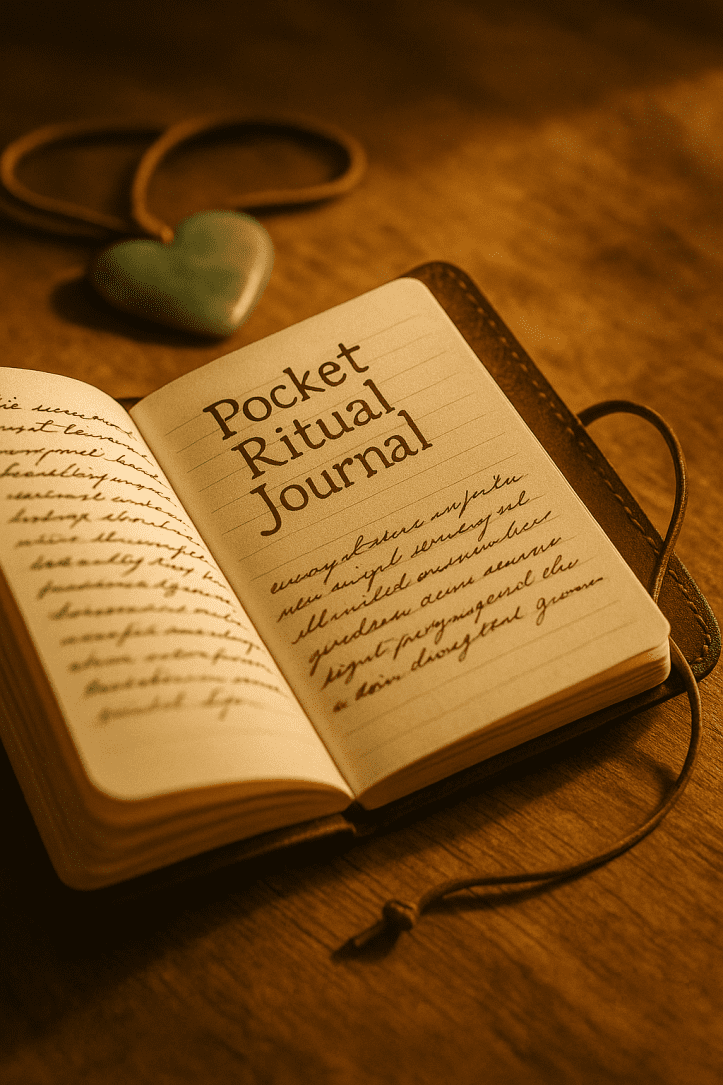
7) Pocket Ritual Journal – Record the Whisper
Memory is a ritual. A small journal beside your altar turns moments into medicine.
Energy & Uses: Throat/Third Eye integration; Mercury/Moon reflection. Close entries with “It is done.”
1. Who were the Arawaks and where did they live?

The Arawaks were an Indigenous people who thrived across the Caribbean — from present-day Bahamas and Hispaniola to Jamaica, Puerto Rico, and parts of South America. They were skilled farmers, astronomers, and artists who built societies based on harmony with nature and deep spiritual respect for the land. Far from being primitive, the Arawaks developed advanced agricultural systems, complex trade networks, and sacred traditions. Their legacy still echoes today in the languages, foods, and cultural practices of the Caribbean
2. What really happened to the Arawak people after 1492?
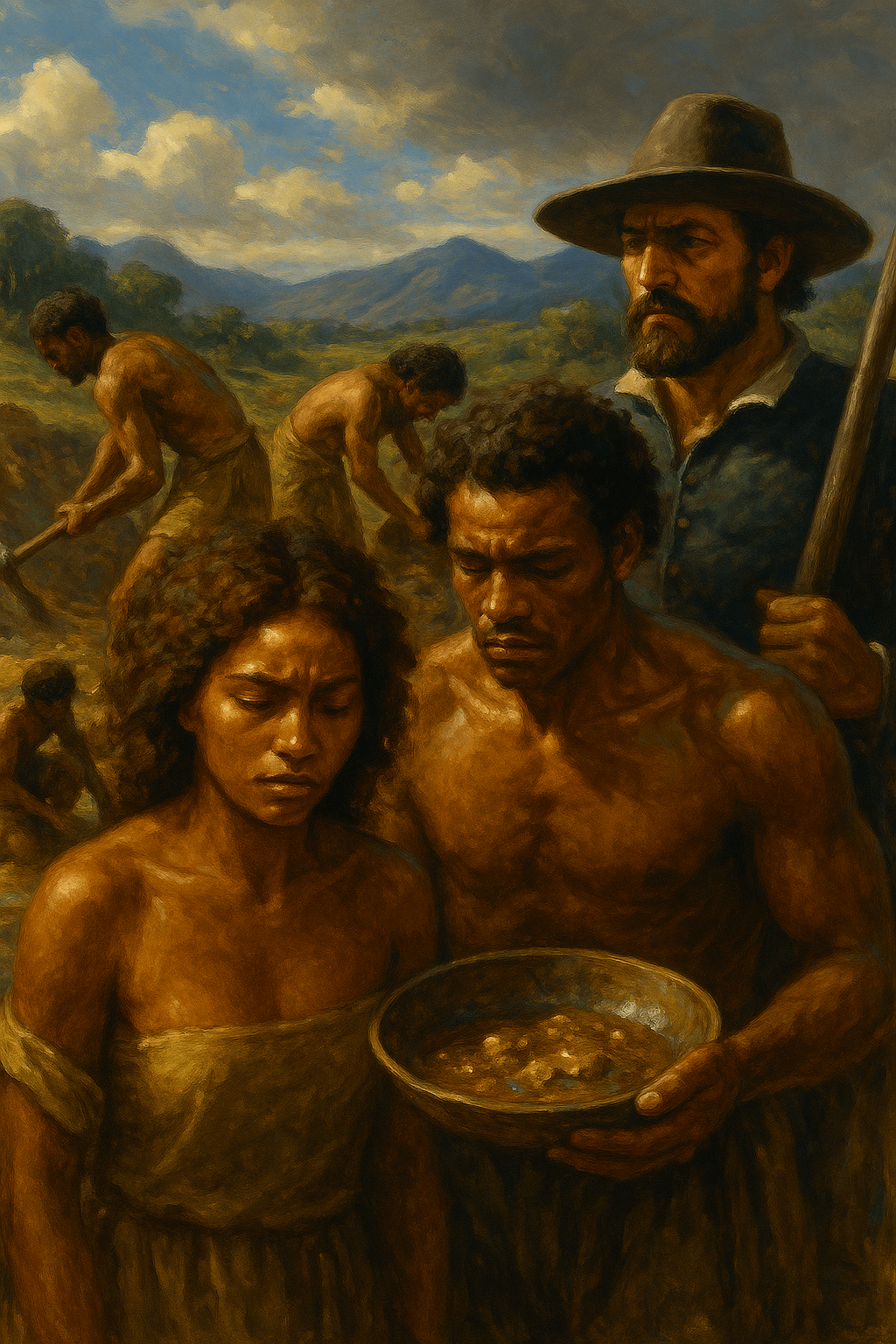
When Europeans arrived in 1492, the Arawaks initially welcomed them — but this peace was short-lived. Within just a few decades, their population plummeted from millions to fewer than 100,000, devastated by disease, forced labour, starvation, and massacres. Entire communities were enslaved to mine gold and build colonial infrastructure. Despite these atrocities, the spirit of the Arawaks survived — woven into the DNA of modern Caribbean peoples and kept alive through oral traditions and ancestral memory.
3. Were the Arawaks actually cannibals as Europeans claimed?
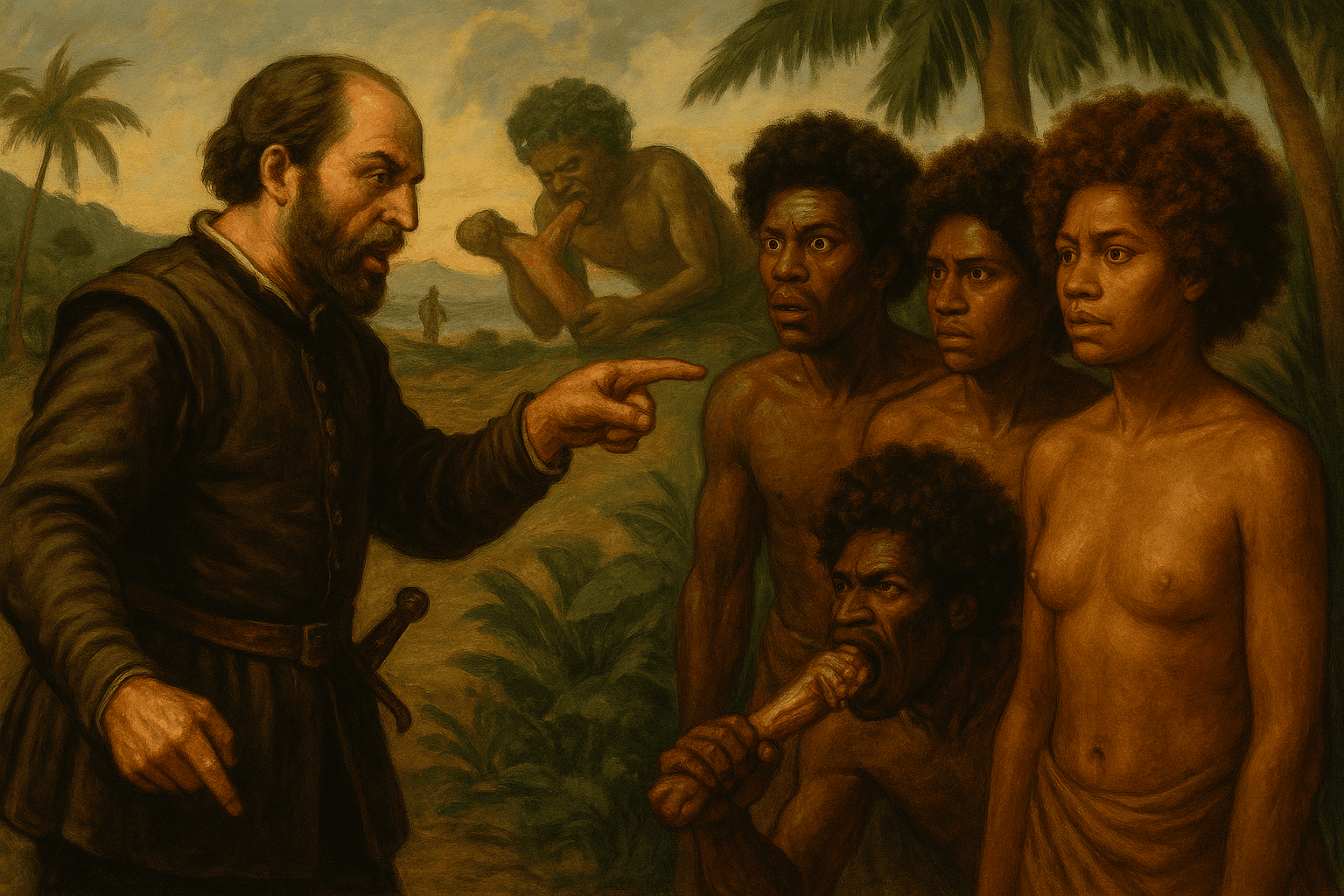
No credible historical or archaeological evidence supports the claim that the Arawaks practiced cannibalism. The accusation was largely colonial propaganda, used to justify their enslavement and extermination. By branding them as “savages,” European powers could claim moral superiority while committing acts of genocide. In truth, the Arawaks were deeply spiritual and often vegetarian, holding sacred ceremonies centred on nature, ancestor worship, and cosmic balance — a stark contrast to the brutality of their conquerors.
4. What is Iti and why was it central to Arawak spirituality?
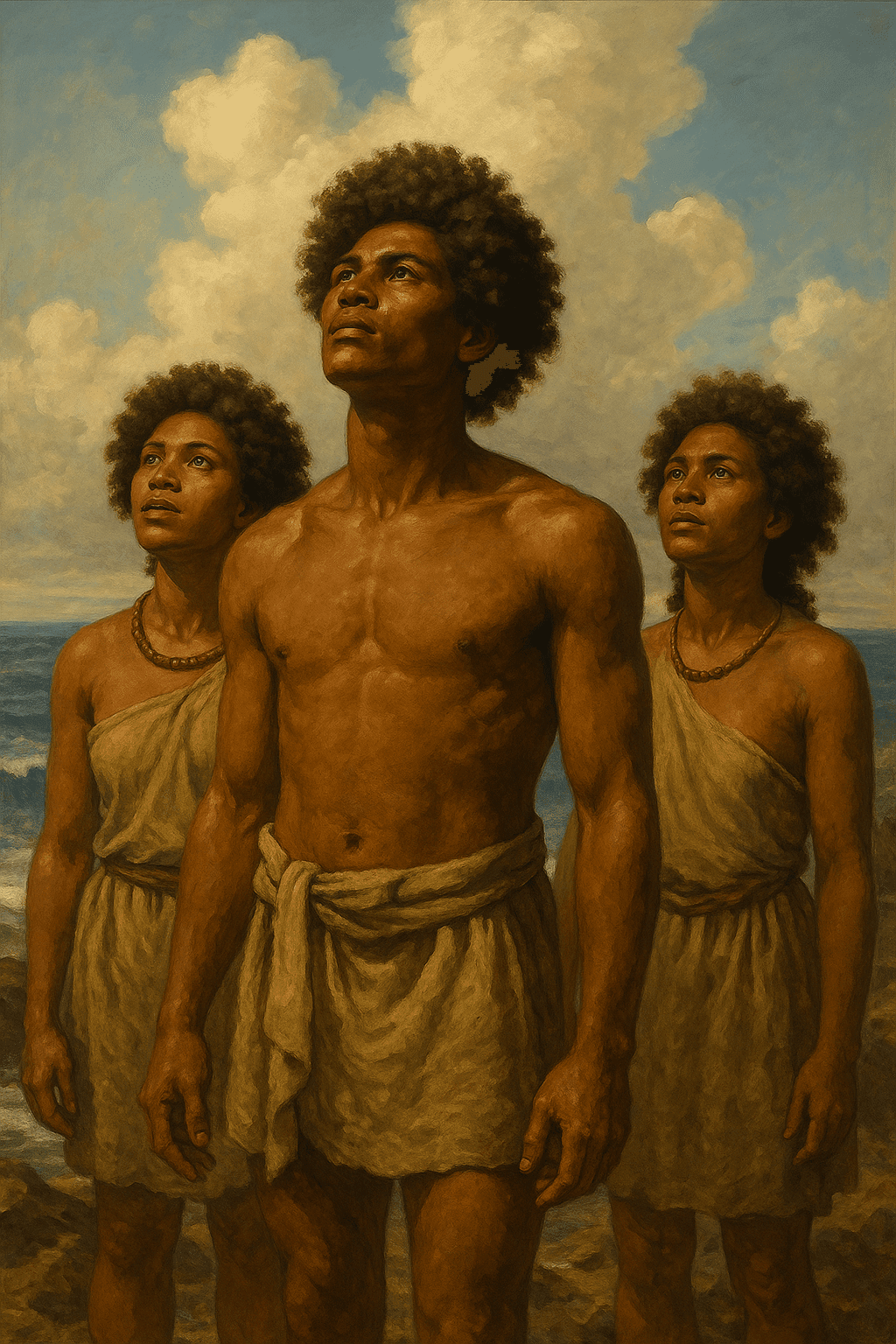
Iti was the sacred concept of origin and return — the cosmic home where the spirit was believed to journey after death. It was not a place of punishment or reward but a realm of remembrance, where ancestors and descendants existed in eternal communion. The Arawaks believed that living in harmony with nature was a way of honouring Iti, and many of their rituals — from planting cycles to funeral rites — were designed to maintain this spiritual connection.
5. How did Arawak beliefs influence Caribbean culture today?

Arawak traditions are still present throughout the Caribbean, often hidden beneath colonial layers. Practices such as herbal healing, lunar planting cycles, and ancestor veneration all trace back to Arawak spirituality. Even the rhythms of Caribbean music echo their drumming traditions, while many place names — rivers, towns, and islands — still carry Arawak words. Their worldview also shaped modern Caribbean values: community over conquest, balance over greed, and respect for the natural world.
6. Why is it important to uncover the truth about the Arawak genocide?

Revealing the truth is essential not only for historical accuracy but also for spiritual healing. Colonial narratives have long dehumanised Indigenous peoples, erasing their wisdom and contributions. By acknowledging the genocide and dismantling the myths, we restore dignity to the Arawak ancestors and reclaim the stories that were silenced. This process also teaches modern society how propaganda can justify oppression — and how vital it is to question official histories.
7. How can I honour the memory of the Arawak ancestors today?

Honouring the Arawaks can be as simple as learning their history and sharing it with others. You can create a small ancestral altar with offerings of water, fruit, or flowers and speak their names aloud — an act many Caribbean elders still practice. Supporting Indigenous-led initiatives, respecting sacred lands, and living in harmony with nature are also powerful ways to keep their legacy alive. Most importantly, commit to being a guardian of truth in a world still shaped by colonial lies.
8. What spiritual lessons does their story teach us about humanity?

The story of the Arawaks is a reminder that empires rise and fall, but the spirit endures. It teaches us that truth can be buried but never destroyed — and that ancestral wisdom often holds solutions to modern crises. Their commitment to balance, community, and respect for creation offers a blueprint for humanity’s future. Above all, their resilience proves that even in the face of extermination, the soul of a people can never be fully erased.
🌟 Join the Journey – Awaken the Ancestral Memory Within You
The story doesn’t end here — it begins inside you. Every time we speak the names of forgotten peoples, every time we
question the lies and honour the truth, we help heal a wound that has been open for centuries.
📡 Spread the Ancestral Word – Share Their Story
Every share keeps ancestral truth alive — your click carries their memory forward. Be the messenger. Be the bridge. Be the voice that refuses to let their story fade into silence.
📘 Facebook🐦 X (Twitter)📱 WhatsApp✉️ Email
🌟 Join the Mission — Keep the Flame Alive
Every truth spoken is a spark against the darkness. When you subscribe, share, or step deeper into the Inner Circle, you become part of a lineage of truth-tellers, wisdom-keepers, and light-bringers walking the path our ancestors began.