
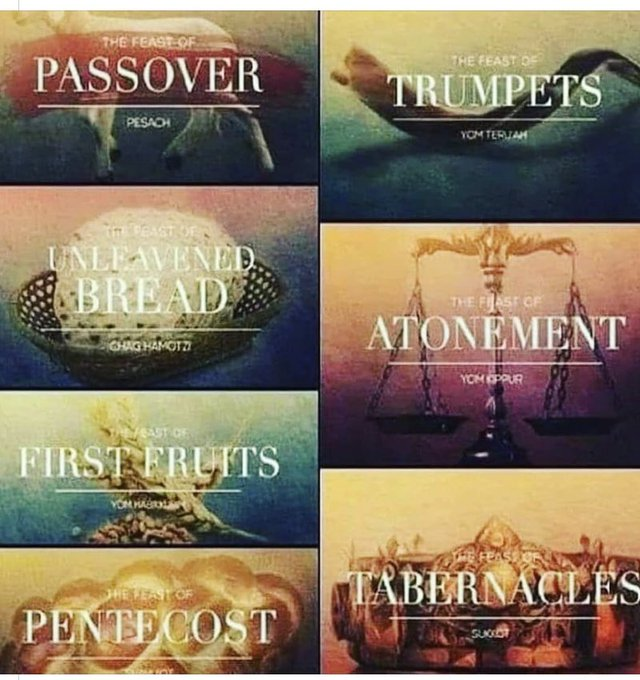
The image presents a collection of illustrations representing six significant Jewish feasts. These feasts, known as “Appointed Times,” are observed according to the Hebrew calendar and hold historical and theological importance for the Jewish people and some Christian groups.
Passover (Pesach): Commemorates the Exodus from Egypt and the liberation of the Israelites from slavery. The depiction shows the blood of a lamb on a doorpost, symbolizing the biblical Passover sacrifice.
Feast of Unleavened Bread (Chag HaMatzot): Follows Passover and celebrates the Israelites’ hasty departure from Egypt, reflected in the eating of unleavened bread (matzah), as depicted by the basket of matzah.
Feast of First Fruits (Yom HaBikkurim): Occurs during the week of Unleavened Bread and is a time to present the first harvest of the barley crop to God, symbolizing the first yield of the land of Israel.
Feast of Weeks or Pentecost (Shavuot): Celebrated seven weeks after Passover, commemorating the giving of the Torah at Mount Sinai, often associated with wheat harvest, as shown by the two loaves of bread.
Feast of Trumpets (Yom Teruah): Known in modern times as Rosh Hashanah, this feast begins the Jewish High Holy Days and is marked by blowing the shofar, a ram’s horn trumpet.
Day of Atonement (Yom Kippur): The holiest day of the Jewish year, it involves fasting and prayer for atonement, represented by the scales symbolizing judgment and atonement.
Feast of Tabernacles (Sukkot): Celebrates the Israelites’ 40-year journey in the wilderness, where they lived in temporary shelters (sukkot), as shown by the depiction of a sukkah.
These festivals have deep roots in biblical commands and traditions and are observed with various rituals and customs to this day. They form a rich tapestry of Jewish religious life, connecting the past with the present through worship, remembrance, and community.
Pingback: Yeshua's Observance of the Sabbath: A Historical Perspective