
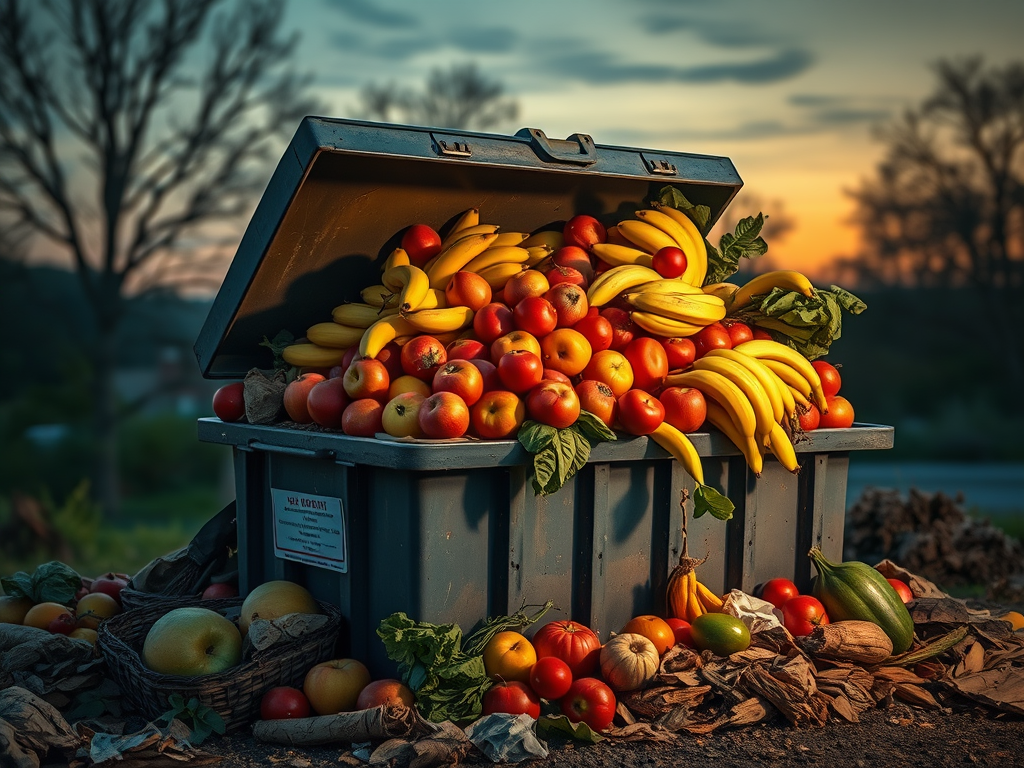

Every day, supermarkets toss out mountains of perfectly edible food—fresh fruits, vegetables, baked goods, and more—straight into dumpsters. According to the UN Food and Agriculture Organization, approximately 1.3 billion tonnes of food is wasted globally each year, while 828 million people go to bed hungry every night. In the United States alone, grocery stores discard $18.2 billion worth of food annually—enough to feed millions of families.
Sarah Martinez, a former supermarket employee in Chicago, saw this wasteful practice firsthand. She said, “Every night, we would fill multiple dumpsters with fresh produce and packaged goods.” One evening, I watched as we threw away over 200 pounds of bananas. They were perfectly good but had slight blemishes. That same day, I saw a homeless man digging through our garbage for food. It broke my heart.
Why does this happen? Supermarkets blame “contamination” or strict end dates, but the truth is much deeper. They let food sit on shelves, waiting for it to sell, until it’s too late. A 2023 study by the Environmental Protection Agency found that 90% of Americans throw away food too soon. They misunderstand “best by” dates, which aren’t actually safety indicators at all.
The saddest part is that even when someone tries to rescue this food, they’re blocked. Barriers are thrown up: “It’s contaminated,” they say. “It’s not allowed.” But why? Who is being protected here—people in need, or the profits of those who control the food supply?
The Fruits and Vegetables That Hurt the Most
The most painful image is seeing fresh, colorful produce—bananas, tomatoes, apples, greens—piled high in waste bins. These are gifts from the Earth, grown by nature and nurtured by God. The food wasn’t created by supermarkets, yet they act as if they own it completely. Studies show that produce accounts for 45% of all food waste in supermarkets. This waste has an estimated value of $15,000 per store every month.
James Wilson, founder of FoodShare NYC, shares: “We partnered with three local supermarkets last year. We rescued over 50,000 pounds of produce. That food fed 2,000 families who would have otherwise gone without fresh vegetables. The solution exists—we just need more stores to join.”
A Wake-Up Call for All of Us
This is not just a problem of corporations—this is a moral crisis. We all share responsibility. While companies need to do better, we must also think about our habits. The average American family wastes $1,500 worth of food annually, contributing to both environmental damage and economic loss.
But let’s be clear: it is unfair. It is unjust. There is no excuse for this. If food can be saved, it should be saved. If people are starving, they should be fed.
What Can Be Done?
- Hold Supermarkets Accountable: Demand transparency about waste metrics from your local stores. Success story: Walmart committed to zero food waste by 2025 after public pressure. The company has already achieved a 57% reduction through donation programs.
- Prevent Waste Earlier: Support organizations like Food Shift. It has saved over 2 million pounds of food. They work directly with suppliers to redirect surplus before it reaches stores.
- Support Rescue Initiatives: Organizations like Feeding America rescue 4.7 billion pounds of food annually. You can volunteer, donate, or start a local chapter.
- Advocate for Policy Change: Contact your representatives to support bills like the Food Donation Improvement Act. France’s food waste ban has already resulted in 156 million meals being rescued annually.
- Foster Community Action: Join or create a local food rescue group. The Boulder Food Rescue network saves 1,000 pounds of food daily using just bicycles and volunteers.
Take Action Today
- Sign up to volunteer with your local food rescue organization
- Download the Too Good To Go app to buy surplus food from local stores
- Start a petition for your local supermarket to implement a food donation program
- Share your food waste reduction story using #NoFoodWaste
- Join our monthly community food rescue events (details in comments)
A Vision for Change
Imagine a world where no food is wasted. In this world, no child goes to bed hungry. Resources are treated with the respect they deserve. God grew these fruits and vegetables for all of us, not for them to be thrown in the trash.
The next time we see waste—or contribute to it—let’s remember the injustice. Let’s challenge the status quo, support those who fight against food waste, and change our relationship with the Earth’s blessings.
Share your commitment to reducing food waste in the comments below.
How will you help create change in your community? Together, we can build a world where no food is wasted, and no one is left behind.
Join our growing community of food waste warriors. Sign up for our monthly newsletter. Stay informed about local initiatives and success stories.